Dog Dex #006 — Newfoundland · The Water-Type
Dog Dex · Entry #006
💧 WATER-TypeNewfoundland
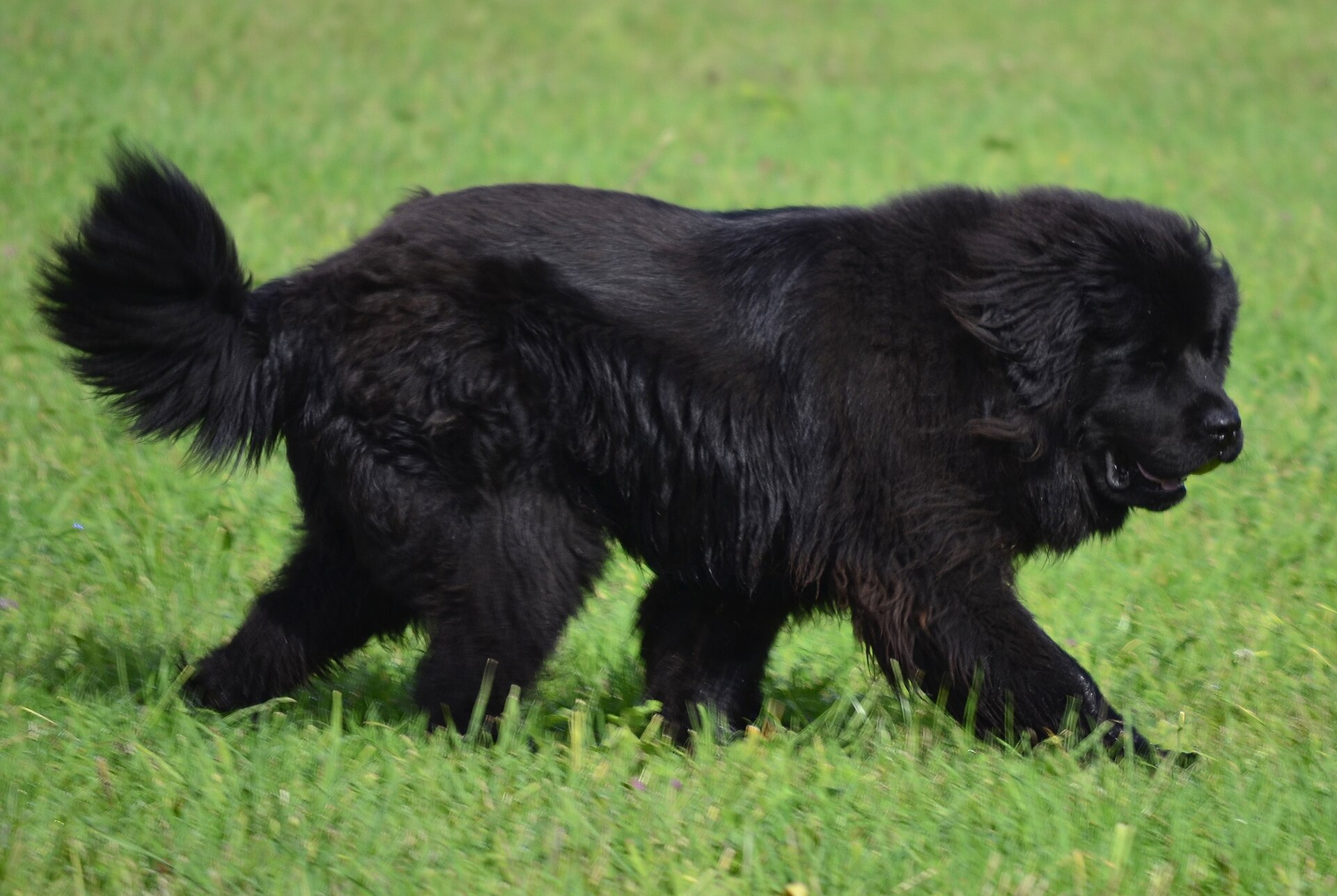
“Rescue Instinct” — webbed feet, 100 lbs, saved sailors from cold Atlantic water for centuries
Photo: Hartmann Linge / Wikimedia Commons (CC BY-SA 4.0)
Newfoundland
“Rescue Instinct” — webbed feet, 100 lbs, saved sailors from cold Atlantic water for centuries
Signature Move
Rescue Instinct
Newfoundlands have partially webbed feet and a fully water-resistant double coat, and they will swim toward a drowning human without training. This is not learned — it is a hardwired response the breed carries genetically. A single documented Newfoundland once towed 20 shipwrecked sailors to shore in the north Atlantic, one at a time, over four hours.
Origin
Newfoundland, Canada · 1500s
Weight
100–150 lbs
Height
26–28 in
Coat
Water-resistant double coat
Why they’re Water-type
Water-type dogs share deep calm, slow reflexes on land, and a completely different mode of operation the moment they hit water. Newfoundlands are the extreme case. On land they move like a bear rearranging its weight. In water, they become elegant — a full swim posture with the tail as a rudder, the webbed feet extending, the neck lifting a rescued person clear of the waterline. Their heat regulation is oriented around cold water: dense oiled undercoat, muscular back-legs, wide lungs. On a warm summer day they will lie down and refuse to get up until the ambient temperature drops.
The story
The Newfoundland breed developed in the Canadian province of the same name during the 1500s and 1600s, likely from crosses between indigenous North American dogs and European mastiff types brought by Portuguese, Basque, and English fishermen. The breed’s job was to work alongside cod fishermen — hauling nets, retrieving lines that had fallen overboard, and pulling people out of the water during storms. This was documented so extensively in shipping records that by the 1700s, ocean-going vessels routinely traveled with a Newfoundland on board specifically for rescue duty. The breed remained a working water dog until modern life-jacket technology reduced the need in the mid-20th century.
Famous Newfoundlands
- Seaman — Meriwether Lewis’s Newfoundland who accompanied the Lewis and Clark expedition (1804–1806). Journals describe Seaman diving into rivers to retrieve game and successfully defending the camp against a grizzly bear.
- Boatswain — Lord Byron’s Newfoundland, for whom the poet composed ‘Epitaph to a Dog’ (1808), one of the earliest famous poems about a dog.
- Rigel — reportedly aboard the Titanic as an officer’s Newfoundland; some accounts describe him swimming next to a lifeboat for three hours in freezing water until rescue arrived.
Should your dog be a Water-type Pokedog?
If your dog is genuinely gentle, slow to react on land, and transforms the moment it sees water — that’s the Water read. Newfoundlands, Labradors, Portuguese Water Dogs, Chesapeake Bay Retrievers, and rescued dogs from coastal shelters all fall here.
Make your dog a Water-type Pokedog
Free preview card of your dog as their creature. Yours to keep, no matter what.
Start with your dog’s photo →